Landsec
We have delivered multiple projects for Landsec within live shopping centres, where close coordination with centre management, robust safety controls, and carefully planned logistics have been essential to the successful completion of each scheme.
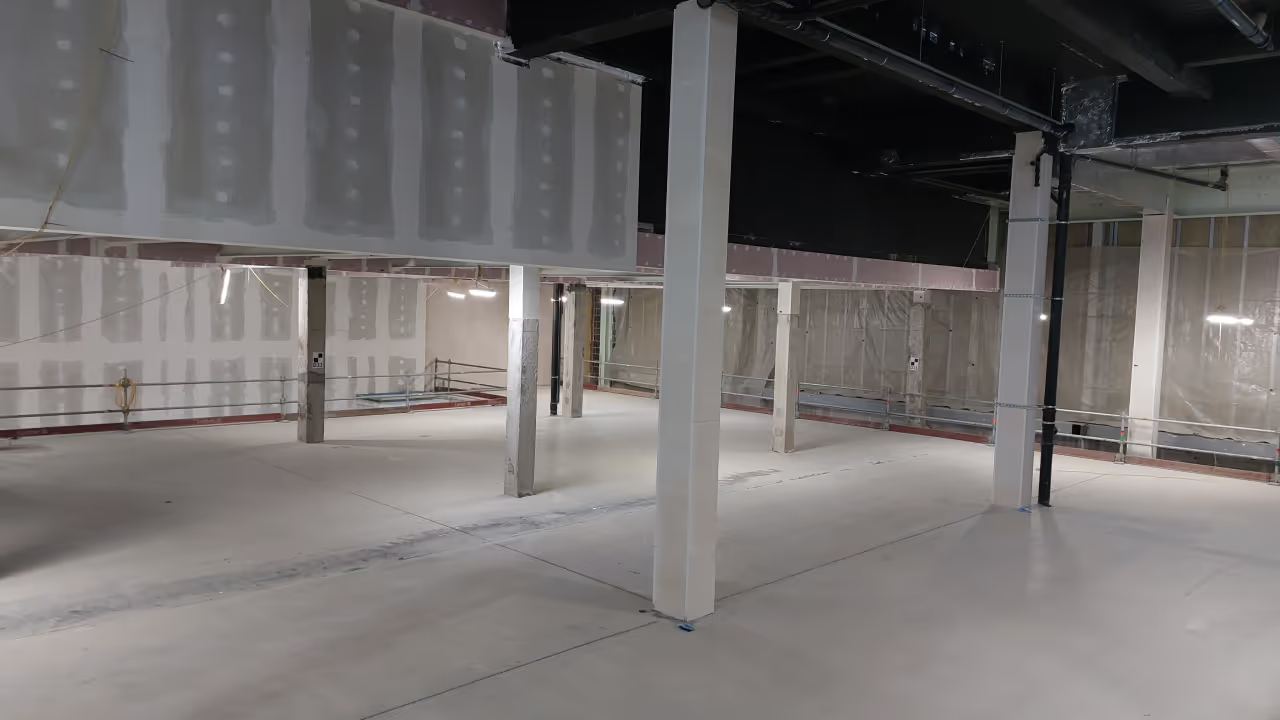
Leeds White Rose: We carried out structural modifications to two retail units within the White Rose Centre to create suitable spaces for incoming tenants. Works included a full strip-out, significant demolition, removal of lifts and escalators, perimeter fire-stopping, new drainage, and shop front, wall and ceiling installation. Delivery schedules were agreed with the centre team to minimise disruption to daily operations. Just-in-time procurement was used wherever possible, with the structural steelwork erected within three days of receipt.
Zara, Trinity Centre, Leeds: This project involved the internal strip-out and structural alteration of an existing five-storey building within the Trinity Centre. Key activities included forming new openings in structural floors, constructing new lift slabs, isolating existing services, M&E works, and installing new shopfront steel. Due to the extent of demolition required, a dedicated drop zone was created at ground level to avoid disruption to stairwells and lift operations.
Decathlon, Trinity Centre, Leeds: We completed the strip-out and full remodelling of a large retail unit to suit Decathlon’s specification. The works involved heavy demolition, installation of new lifts and escalators, new drainage, removal of existing shopfronts to both external elevations and the installation of new glass facades.
H&M, Trinity Centre, Leeds: The works comprised a full strip-out, followed by a reduction in the unit’s floor height to enable connection to an adjacent store level. Once the lower level was formed, we carried out drainage works, fire-stopping, and the installation of tenant signage to the shopfront.
Recommended Projects
Salford Cathedral
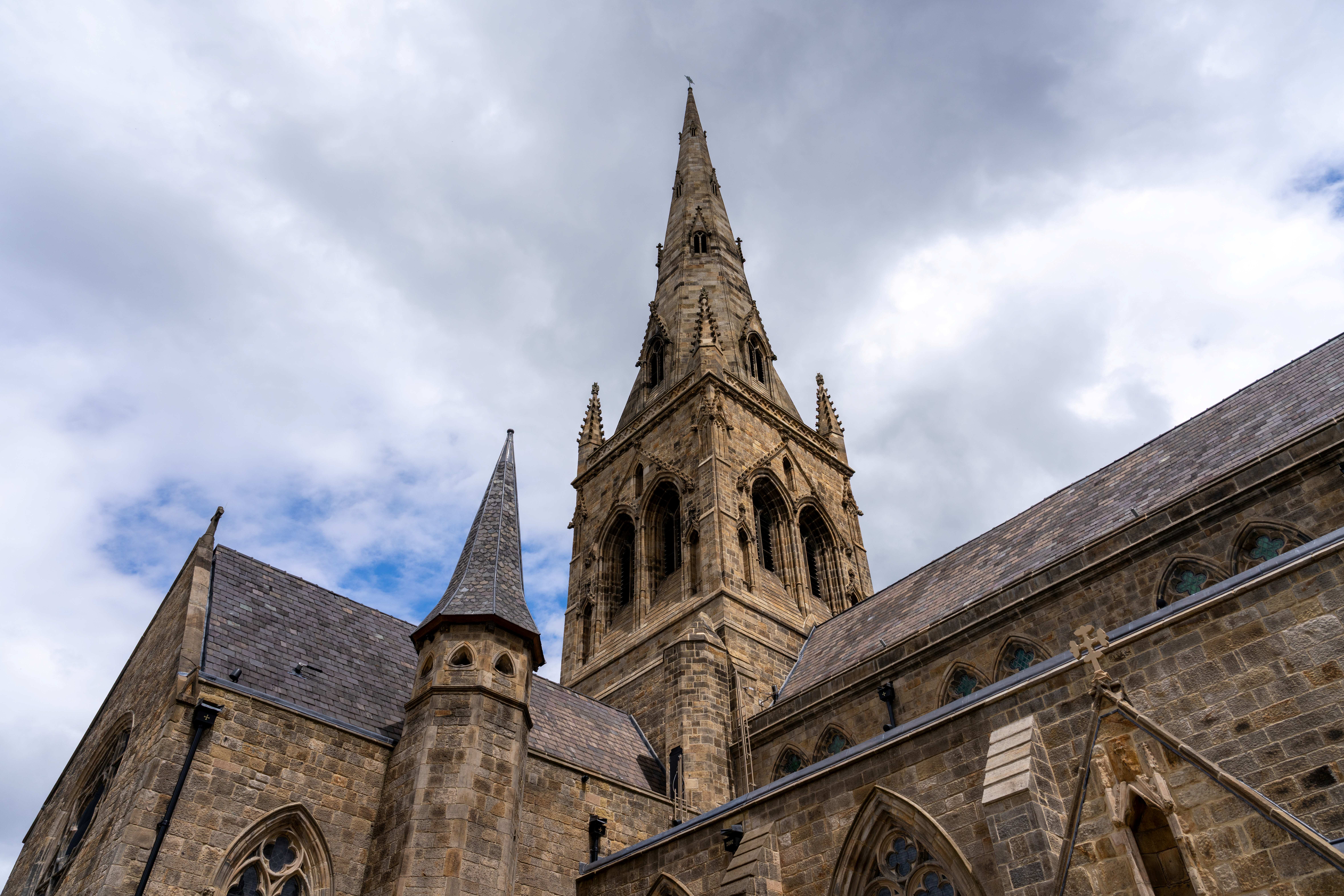
Back in 2022, Simpson was appointed as the main contractor to deliver the conservation and reordering works at Salford Cathedral, a landmark project that has carefully restored and enhanced this important building.
Externally, the programme comprised the complete removal andreplacement of the cathedral’s roof, extensive masonry conservation repairs,and specialist restoration works to the spire, undertaken with the assistanceof a steeplejack. The stonework was carefully cleaned using Thermotechtechnology and fully repointed, while the historic stained-glass windows wereexpertly restored.
Internally, the project included the installation of a newfloor incorporating underfloor heating, together with the demolition of theexisting toilet and confessional block and the construction of new toiletfacilities and confessional rooms. A new mechanical, electrical and lightingsystem was also introduced. High-quality finishes and decorative works werecompleted throughout, including specialist ceiling painting with intricatestencilling, fine joinery, detailed metalwork and the introduction of a strikingnew altar and font.
The cathedral finally reopened its doors in July and hasbeen well received by the Diocese and the wider community. We are immenselyproud to have contributed to the preservation and revitalisation of such asignificant heritage asset, helping safeguard its legacy for futuregenerations.

Bradford Arts Centre
Formally known as ‘Kala Sangam’, Simpson completed the redevelopment of the newly named ‘Bradford Arts Centre’.
The 75 week program has seen an extensive reconfiguration and upgrade to the existing building facilities creating a state-of-the-art, space for artists, audiences and businesses, reconnecting the building and arts centre to the local community.
The project has seen the creation of a new theatre, five dance studios, a new central staircase and a permanent home for volunteer-led community radio station Bradford Community Broadcasting (BCB).
The introduction of a new entrance, two new lifts and a dedicated changing place facility now ensures the building is fully accessible for the first time in its 140-year history.
Endsleigh Convent
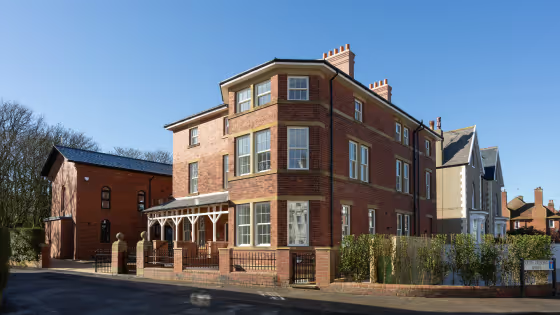
Built in the late 1800s, Endsleigh Convent in Filey served as a convent and holiday retreat for the Sisters of Mercy of the Middlesbrough Diocese.
The goal was to sensitively redevelop the historic structure into five high-end residential apartments, preserving its architectural character while introducing modern functionality and comfort. The project aimed to honour the building’s heritage while adapting it for contemporary coastal living.
The development has seen
- Internal remodelling carried out across all floors to create 5 spacious, open-plan apartments.
- Extensive structural works to support the new layouts and to accommodate a platform lift serving all levels.
- The former chapel underwent a thoughtful extension, transforming it into a unique residence with “upside-down” living:
The redevelopment of Endsleigh Convent successfully blends heritage preservation with modern design, creating a collection of distinctive homes that respect the building’s past while embracing its future. The project stands as a model for adaptive reuse in a sensitive coastal setting.






Let's Build
Tomorrow, Today!